
Signs your flat roof needs repair before it fails
Signs your flat roof needs repair before it fails in Van Nuys are easy to miss, because a flat roof fails at its details long before it fails as a surface. This guide covers ponding, seams, blistering and interior clues for the apartment and commercial low-slope roofs that make up Van Nuys's second roofing market.
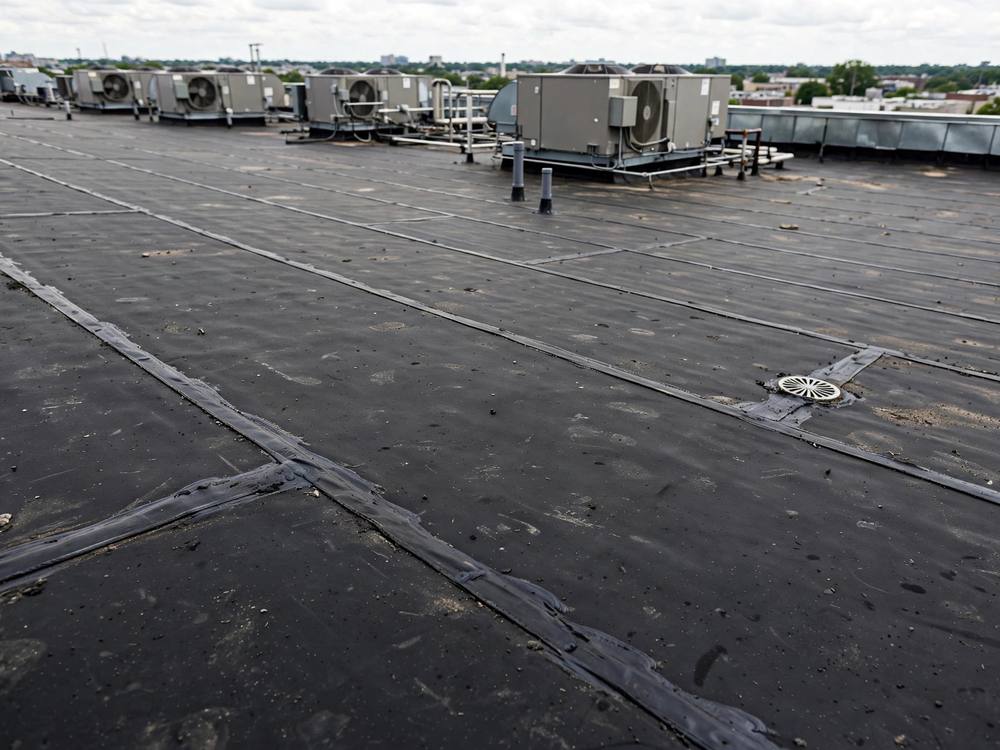
The early warnings most flat roofs give
Ponding water that remains days after rain is the clearest warning: it finds every seam, stresses the membrane, and points to a drainage, slope or drain problem rather than a surface problem. Bubbling and blistering point to trapped moisture or adhesion failure. Seam splits, cracks and shrinkage at parapets point to membrane and flashing age.
None of these signs, alone, proves the roof needs replacement. Together, and with their location — at drains, at parapets, at penetrations — they tell a roofer whether the job is a targeted repair, a section replacement, or a full membrane replacement. That judgement needs a walked inspection, not a photograph alone.
Interior clues: stains, odours and sagging
Inside, look for ceiling stains that appear after rain, damp or musty smells in top-floor rooms, and any sagging ceiling or soft deck feel. A stain on a flat-roof building is, as with pitched roofs, rarely directly below the entry point: water travels along the deck and along parapet flashing before it shows inside.
On corridor apartment buildings, a stain in one unit can originate several metres away, at a drain, a parapet or a penetration on another part of the roof. That is why a flat-roof inspection maps the whole roof — drains, slope, seams, parapets and penetrations — rather than patching above the stain.
Common mistakes on Van Nuys flat roofs
Coating over a ponding, blistered or seam-split roof without fixing drainage is the most common mistake: the coating hides the failure and the water stays. Another is treating every flat roof as the same system: TPO, EPDM, modified bitumen and built-up roofing fail differently and are repaired differently, and a scope should name the system.
A third mistake is delaying through another rainy season. Concentrated winter rain means a flat roof that ponds in November will pond again in February, with more seam stress each time. A written scope after inspection should state the system, the drainage fix, and the permit route: A permit is required — confirm the repair-vs-re-roof line with LADBS for your scope. Van Nuys is in the City of Los Angeles, so permits run through LADBS, not the County.
Related pages: flat roofing and TPO roofing and Roofing in Van Nuys. To discuss your roof, see contact or call (818) 474-8963.
A few answers before you start
That depends on the system, drainage, exposure and maintenance, not on a single number. A walked inspection of drains, seams and parapets is how remaining life is judged.
Ponding that remains days after rain is a warning, not a cosmetic issue: it stresses seams and points to a drainage or slope problem that should be scoped.
Only where the system, condition and drainage suit a coating. A scope should name the system and the drainage fix, not promise a coating for every roof.
Get your Van Nuys flat roof inspected before the next rainy season
Call (818) 474-8963 to describe what you are seeing, or see contact for the address. Scope is discussed in writing before work starts.