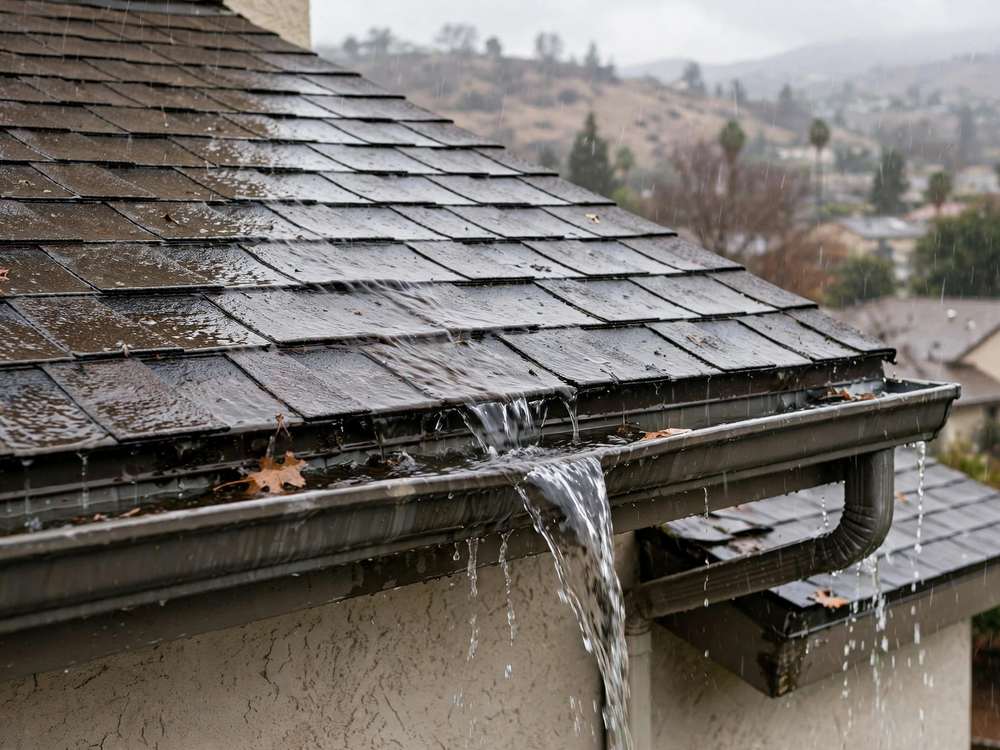
Roof installation Van Nuys work usually means building a whole new system on a house that has already lived through several Valley decades. BFiber Roofing Repair & Install, based at 14202 Hamlin St, installs that system from the deck up: tear-off, sheathing, underlayment, flashing, ventilation, and the field material, chosen for the tract, apartment, or corridor building underneath it.
We show photosDeck and flashing shown before closing
We sweep dailyNails and debris swept from the yard
We pull permitsPermit and inspection steps explained
We explain scopeScope described in plain terms
What a Full Roof Installation Includes
A new roof is a system, not a single layer. Here is what a full installation scope covers on a Van Nuys home or building, and which parts get discussed separately when the roof underneath is unusual.
Full Tear-Off
Every existing layer comes off down to the deck, including the second and third layers that are common on Van Nuys tract homes. Only with the deck exposed can soft sheathing, skipped boards, and old flashing be found and dealt with before anything new goes on.
Deck Inspection and Repair
The deck is checked board by board for rot, delamination, and soft spots, and damaged sheathing is replaced. On postwar homes this step often turns up original spaced sheathing, which LADBS rules address by requiring solid sheathing under a new covering.
Underlayment and Flashing
Underlayment covers the field, and new flashing goes at every valley, wall, penetration, and roof edge. These are the details that decide whether a Van Nuys roof survives its first concentrated winter storm, when several inches of rain can arrive in a single event.
Ventilation Upgrades
Ridge and intake ventilation are sized to the attic so summer heat can move out instead of baking the shingle mat from below. Van Nuys Airport normals put July afternoons at 91.2°F and August at 93.1°F, with average hottest days in the mid-100s°F, so ventilation is a durability question here, not a cosmetic one.
Permit and Inspection
A full replacement in the City of Los Angeles requires an LADBS permit, and the job is inspected before it is closed out. A permit is required — confirm the repair-vs-re-roof line with LADBS for your scope.
Cleanup and Photo Record
Debris is hauled away, nails are swept from the yard, and you receive photos of the deck and flashing before the roof is closed up, so the layers you paid for are on record.
Homes and businesses.
The approach is the same for a home and a business: inspect first, scope in writing, then build. What changes is access, scheduling, and who needs the paperwork.
For Your Home
On a single-family home or small apartment building, the work centers on the pitched tract roof: tear-off, deck, underlayment, flashing, and ventilation, with the yard protected and cleaned daily.
Leak over a bedroom ceiling
Storm-lifted shingles and bare spots
Original 1960s roof at end of life
For Your Building
On a commercial building, the work centers on the flat or low-slope system: membrane, drainage, parapets, and curbs, phased so tenants and operations are disrupted as little as possible.
Ponding water near roof drains
Blistered or failed membrane seams
Tenant leaks during winter storms
Roof Installation in Van Nuys, California Done Right
A plain-language look at what a new roof installation involves on a Van Nuys building, and when it is the right call.
Roof installation in Van Nuys means removing the existing roof down to the deck, repairing the sheathing, then building a new system from the underlayment up: new flashing at every penetration, drip edge at the eaves, and ventilation sized to the attic. The field material might be architectural shingle on a Ranch tract, tile on a Spanish-style home, standing-seam metal on a modern remodel, or a membrane on a flat addition or commercial building.
Most Van Nuys housing dates from the postwar boom: the ACS-based median construction year is 1968, the 1950s alone account for 22.1% of homes, and 67.2% of the stock was built before 1980. That is why installations here so often begin with layered old roofing, original sheathing, and undersized attic vents, and why a surface-only fix rarely lasts.
A roof is a system: deck, underlayment, flashing, and ventilation all have to work together.
What it is
Full tear-off and replacement of your roof system down to the deck, built back with new waterproofing.
When you need it
When leaks return, shingles are missing or bald, or the roof is past 20 years old.
What to expect
A written scope, a fixed price, three to eight working days, and a clean yard each evening.
What to Expect During Your Roof Install
A predictable sequence, so you know what happens on each visit and what is being decided before it is built.
Roof Inspection
The roof is walked, the attic is checked where accessible, and the roof is measured. Photos document the deck, flashing, and any soft spots found, so the scope that follows is tied to what was actually seen.
Walk the roof
Attic check
Written scope
Material Selection
You choose the field material and color from samples: shingle, tile, metal, or membrane, with the layers beneath it explained in plain terms rather than left as line items.
Pick material
See samples
Spec flashing
Tear-Off and Decking
Landscaping is protected, the old roof is stripped to the deck, and damaged sheathing is replaced. Anything structural found at this stage is photographed and discussed before it is added to the scope.
Protect yard
Strip layers
Fix deck
Installation
Underlayment, drip edge, valley and penetration flashing, and the field material go on in sequence, with ventilation fitted as the system closes up.
Underlayment first
Flash details
Set field
Final Walkthrough
The yard is swept for nails, debris is hauled away, and the finished roof is walked with you, with photos of the deck and flashing kept on record.
Sweep nails
Haul debris
Walk together
Tools and Methods We Use on Every Roof
The tools matter less than the sequence they serve. Here is what each one does on a Van Nuys installation, and the methods that tie them together.
Roofing nail gun and air compressor
Drives fasteners at the correct depth and pattern so shingles seat flat and hold through Santa Ana gusts, which in strong Valley events run 50–65 mph.
Chalk line and shingle cutter
Lays out straight courses and trims shingles cleanly at hips, valleys, and rake lines, where a crooked course becomes a water path in the first winter storm.
Pry bar and roofing hammer
Lifts old shingles, nails, and flashing during tear-off while letting the crew feel soft spots in the sheathing that a machine would miss.
Moisture meter and infrared camera
Finds trapped moisture in the deck and insulation before the roof is closed, so wet sheathing is replaced rather than sealed inside a new system.
Safety harness and roofing ladder
Keeps the crew tied off and stable on steep pitches and two-story homes, where most of the fall risk on a residential job actually sits.
The thermal illustrations on this page are generated from photographs and are not measurements of your roof.
Methods
Leaf blower and magnetic sweeper
Clears debris from valleys and gutters, and pulls stray nails from the lawn, on every workday rather than only at the end of the job.
Documented Layer-by-Layer Installation
Every layer is photographed before it is covered, so the deck, underlayment, and flashing are on record even after the field material hides them.
Title 24 cool-roof compliance
For a residential replacement over half the roof area, LADBS calls for a CRRC-labelled cool-roof product. In Climate Zone 9, the sourced residential re-roof figures are aged reflectance 0.20 and SRI 16 for steep slopes, and 0.63 and SRI 75 for low slopes, each with thermal emittance 0.75 — confirm your parcel's zone on the permit.
Balanced attic ventilation design
Intake and exhaust vent area are calculated for the attic volume, then ridge vent is fitted so air moves from soffit to ridge instead of stagnating under a hot deck.
Flashing-first waterproofing
Every penetration, valley, and wall transition gets new flashing before the field material goes on, because flashing failure, not field wear, is where most Van Nuys leaks begin.
When a New Roof Is the Right Call
Original 1960s roof
Your Van Nuys home still has its original 1960s roof, with two or three layers of shingles on top of each other.
All layers come off, the deck is inspected and repaired, and a new architectural shingle system goes on with fresh underlayment and ventilation. The tear-off also exposes any framing or sheathing issue that a layover would have hidden.
Pre-sale replacement
You are selling the house and the buyer's inspector flagged the roof as near the end of its life.
A written scope is prepared from the inspection photos, the permit route is confirmed with LADBS, and the installation is scheduled around the sale timeline so the roof is not the item that stalls it.
Flat commercial ponding
A flat commercial roof in Van Nuys has ponding water and seam failures that keep returning after patching.
Tapered insulation corrects the drainage, and a new membrane is laid with reworked drains and scuppers, so water moves off the roof instead of sitting on seams.
Upgrade to tile
You want to move from asphalt shingles to tile or standing-seam metal for a longer-lived roof.
The framing is evaluated for the added weight first, since tile in particular can push a job into plan check, and the new system is installed with underlayment and flashing rebuilt at the same time.
Outcome:You get a roof whose field material and underlayment are both new, rather than a heavier covering laid over an ageing deck.
Storm damage replacement
A winter storm lifted shingles and drove water into the attic, and the roof needs full replacement rather than another patch.
The damage is documented, the roof is dried in against the next storm, and a new system is installed once the weather allows, with flashing rebuilt at every penetration the storm exposed.
Outcome:Your home is dried in and protected before the next storm, with a new roof and a photo record of the deck beneath it.
Van NuysVan Nuys Civic CenterLake Balboa
How Roof Installation Runs in Van Nuys
Van Nuys sits on the San Fernando Valley floor, where summer roof surfaces bake under low-90s°F afternoons and winter rain arrives concentrated: the Van Nuys Airport normal is 13.42 inches a year, with February the wettest month at 3.79 inches and July at 0.00. A roof here fails from heat ageing plus first-storm leaks, not from snow or hillside fire exposure.
Full installations are usually scheduled around the dry season and the rain season, because tear-off leaves a home exposed and winter storms can deliver a third of a normal year's rain in a single day — 4.30 inches fell at Van Nuys on 4 February 2024.
Van Nuys is a neighborhood in the City of Los Angeles, annexed 22 May 1915, so permits run through LADBS, not the County. A full replacement requires an LADBS permit; a permit is required — confirm the repair-vs-re-roof line with LADBS for your scope.
Van Nuys: Larger lots with mature trees mean more leaf debris in valleys and gutters, so drainage is checked as part of every installation here.
Van Nuys Civic Center: A mix of older commercial buildings with flat roofs, where ponding water and seam failures are the most common issues corrected with tapered insulation.
Lake Balboa: Postwar Ranch homes with low-slope sections over additions, where shingle and flat membrane systems are often blended on the same house.
Valley Glen: Many homes still carry two layers of old roofing, so full tear-off is usually the starting point before a new system goes on.
Van Nuys Airport Area: Commercial and industrial buildings with large flat roofs, where membrane installations are phased around tenant operations.
Summer heat: Valley afternoons average 91.2°F in July and 93.1°F in August at Van Nuys Airport, so shingles age faster and sealants dry out; reflective options and ventilation matter here.
We walk the roof, check the attic, and take photos.
We protect landscaping and set up the dumpster.
From problem to finished result.
IllustrativeThe thermal view is generated from the photograph. It is not a measurement. Drag the handle, or use the arrow keys once it is focused.
Three-Layer Tear-Off in Van Nuys
Before:A 1955 Ranch home carried three layers of shingles, a chronic leak over the kitchen, and rotted sheathing the owners had never seen.
After:All three layers were torn off, the rotted sheathing was replaced, and architectural shingles went on with new underlayment, drip edge, and ridge vent, ending the leak at its source rather than at the stain.
Clear gutters twice a year and check pipe boots each fall, before the first concentrated winter rain tests the new flashing.
Flat Roof Ponding Fix in Van Nuys Civic Center
Before:A small commercial building had a flat roof with standing water near two drains and seams that failed every winter.
After:Tapered insulation corrected the slope and a new membrane went on with reworked drains, so water reaches the scuppers instead of sitting on seams.
Inspect the membrane and drains twice a year and clear debris after Santa Ana wind events, when Valley gusts can drive leaves and grit onto a flat roof.
Storm Damage Replacement in Lake Balboa
Before:High winds lifted shingles across a south-facing slope and drove water into the attic.
After:The damaged slope was documented, the roof was replaced with new shingles and fresh underlayment and flashing, and the attic was checked for wet insulation before close-up.
Check the roof after every major windstorm and keep attic vents clear, since Santa Ana season runs October to April with an average of 32 events a year.
Roof Problems We Solve for Van Nuys Homes
Most roofs inspected in Van Nuys fail for one of a handful of reasons. Here is what is found, and how a new installation addresses each one.
Recurring leakRecurring roof leak at the same spot every winterWater keeps finding the same path, staining ceilings and rotting sheathing a little more each season. Patching buys months, not years. A new installation traces the leak to its source, usually flashing failure or a cracked pipe boot, and replaces every flashing detail as the system is rebuilt.
Wind-lifted shinglesMissing shingles and granule loss after a windstormBare spots expose the underlayment to UV, and the roof starts ageing fast. Once granules are gone, the shingle is done. A new installation resets the field with fresh shingles over a full underlayment layer, with fastening checked so wind uplift is less likely to repeat.
Ponding waterPonding water on a flat roofStanding water finds seams, blisters a membrane, and adds weight to the structure. Left alone, it shortens the life of any flat system. A new installation corrects slope with tapered insulation and reworks drains and scuppers so water leaves the roof.
Attic condensationAttic condensation and high summer heatPoor ventilation traps moisture in the attic, which can rot sheathing from below and drive summer heat into the house. A new installation sizes ridge and intake ventilation to the attic volume so air moves instead of stagnating.
Fascia and soffit rotFascia rot and soffit damage found during tear-offRotted fascia cannot hold a gutter, and damaged soffit lets pests into the attic. Both are found during tear-off, when the roof is open, and repaired as part of the installation scope rather than left for a later, costlier visit.
Why Van Nuys Homeowners Choose a New Roof
A correctly installed roof keeps water out and attic heat down for decades, when the system beneath the field material is built as carefully as the surface.
Stop Chasing Leaks
A Van Nuys leak usually starts at flashing failure or a cracked pipe boot, not in the middle of the field. A new installation replaces every flashing detail, so the same stain stops returning each winter.
Cut Summer Cooling Costs
Valley heat is the slow killer of shingles: July and August afternoons average 91.2°F and 93.1°F at Van Nuys Airport, and average hottest days reach the mid-100s°F. A reflective, CRRC-labelled product on a larger replacement, plus balanced ventilation, is how a new roof answers that heat.
A Roof Built for Valley Heat
Boost Curb Appeal and Value
A new roof changes how the whole house reads from the street, and a signed-off permit record matters when the house is sold, because buyers and their inspectors ask about the roof first.
What you receive
Clear records you can keep and share.
Photo log
Deck and flashing photographed before close-up, so the hidden layers are documented.
Written scope
Materials, steps, and scope in writing, discussed before work begins.
Permit record
The LADBS permit record for your files, showing the job was inspected and closed out.
Maintenance plan
What to check and when, season by season, for the new system.
Choosing the right roof system for your home
The material matters, but the layers under it matter just as much. Here is how the common options compare on a Van Nuys roof.
Asphalt shingle
The tract-house workhorse, and the most common pitched roof in Van Nuys.
The most common pitched choice on Valley tract homes
General industry guides put architectural shingles at roughly 30–45 years, not a promise for any one roof
Repairs are usually straightforward when the deck beneath is sound
Tile
Clay or concrete, heavy and long-lived, with underlayment that ages first.
Tile itself can last many decades in general guides, while underlayment ages sooner
Framing must be checked before a heavier tile system goes on
Underlayment still ages, which is why lift-and-relay exists
Metal and flat
Standing-seam metal or a membrane system, for modern homes and flat sections.
Reflective surfaces help with summer heat on sun-exposed roofs
Suited to low slopes where shingles are a poor fit
A long service life in general guides, with detailing that decides the real result
Materials and systems we install
Architectural shingles
Clay tile
Concrete tile
Standing seam metal
TPO membrane
EPDM rubber
Modified bitumen
Roof underlayment
Towns we serve.
Based in Van Nuys and covering the places around it. Pick one for local details.
Call (818) 474-8963 to talk through your roof and its options.
Call (818) 474-8963 to discuss your roof and next steps.
Frequently Asked Questions About Roof Installation
Published market data, not a quote from BFiber: Angi's Los Angeles guide, updated 31 July 2026, puts the average Los Angeles roof replacement at $17,271, with most projects from $10,256–$24,963. Tile and metal run higher in the same guides, and flat systems are priced by the square foot. Your scope depends on size, pitch, layers to remove, deck condition, and material, so call (818) 474-8963 to discuss your roof.
Duration depends on roof size, system, layers to remove, and deck condition, and no single timeline fits every Van Nuys home. A small shingle roof and a large tile or metal roof are different jobs, and deck repairs found during tear-off change the schedule. Call (818) 474-8963 to discuss timing for your roof.
BFiber Roofing Repair & Install, based at 14202 Hamlin St, Van Nuys, CA 91401. Call (818) 474-8963 to discuss your roof and the areas served, including Van Nuys, Lake Balboa, Sherman Oaks, Panorama City, North Hills, and Valley Glen.
A full roof replacement in the City of Los Angeles requires an LADBS permit. A permit is required — confirm the repair-vs-re-roof line with LADBS for your scope. Permit fee depends on project valuation and route — confirmed at application; no fee figure is published here.
Call (818) 474-8963 to discuss your roof and schedule a walk-through at a time that works for you. You get photos and a written scope to consider before you decide anything.