Residential Roofing in Van Nuys for Tract and Family Homes
Residential roofing Van Nuys work covers the houses the Valley actually built: postwar Ranch tracts, 1960s and 1970s apartments, and the additions and carports added since. BFiber Roofing Repair & Install, based at 14202 Hamlin St, repairs, replaces, and inspects those roofs as systems — field, underlayment, flashing, and ventilation together.
Walk the roofDeck and flashing shown before closing
Check the atticNails and debris swept from the yard
Photograph findingsPermit and inspection steps explained
Sweep for nailsScope described in plain terms
What our Residential Roofing service includes
Residential roofing covers the whole house roof, not just the visible surface. Here is what the service includes, from inspection to cleanup.
Full roof inspection
The full roof is inspected first, with photos, so repair, maintenance, or replacement is recommended from evidence rather than from a glance at the street.
Tear-off and disposal
Where replacement is the scope, all old layers are torn off to the deck, debris is hauled away, and damaged sheathing is replaced before anything new goes on.
Underlayment and flashing
New underlayment covers the field and new flashing goes at every valley, wall, penetration, and roof edge, the details where Van Nuys leaks actually begin.
Ventilation and drip edge
Ventilation and drip edge are fitted to the attic and the roof edge, so summer heat can escape and water sheds cleanly instead of backing under the field.
Cleanup and magnet sweep
The yard is swept for nails and debris is hauled away, so the job ends with a clean property and a photo record of the work beneath the surface.
Homes and businesses.
The approach is the same for a home and a business: inspect first, scope in writing, then build. What changes is access, scheduling, and who needs the paperwork.
For homeowners
For a homeowner, residential roofing usually means the family house: a pitched shingle or tile roof, with the family living below the work and the yard protected daily.
Ceiling stain after rain
Curling or missing shingles
Skylight dripping inside
For property managers
For a property manager, residential roofing usually means small multi-family buildings: flat sections, shared drains, and tenant coordination that a single-family job never needs.
Flat roof ponding water
Lifting membrane seams
Recurring tenant leak calls
What Residential Roofing in Van Nuys covers
A plain-language look at what residential roofing covers in Van Nuys, and why the house's era matters as much as its material.
Residential roofing in Van Nuys covers single-family homes, duplexes, and small multi-family buildings, and the work follows the housing: postwar Ranch tracts with pitched composition shingle, Spanish and Mediterranean homes with tile, and 1960s and 1970s apartment buildings with flat and low-slope sections. The ACS-based median construction year is 1968, the 1950s alone account for 22.1% of homes, and 67.2% of the stock was built before 1980, so most residential roofs here are old enough that the deck and underlayment deserve as much attention as the field.
Two cautions belong on any residential page for Van Nuys. First, part of central Van Nuys sits in the Van Nuys HPOZ, adopted 16 November 2005 as the first Valley HPOZ, where exterior re-roof work goes through preservation-plan review; the parcel's status is checked on ZIMAS, and no boundary map is drawn from conflicting summaries. Second, Van Nuys is valley floor, absent from LAFD's Very High Fire Hazard Severity Zone community list, so fire-zone claims belong to a parcel check, not to a neighbourhood promise.
A house roof is a system: deck, underlayment, flashing, and ventilation all have to work together.
What it is
Installing, repairing and maintaining the roof over a home, from deck to ridge.
When you need it
Active leaks, missing shingles, storm damage, or a roof past 20 years old.
What to expect
A roof and attic walk, photos, a written estimate, then scheduled work.
How our roofing process works
A predictable sequence, so you know what happens on each visit and what is being decided before it is built.
Call and schedule
You describe the roof and any leak history, and a visit is scheduled to inspect the roof and, where accessible, the attic.
Call
Schedule
Photos
Roof inspection
The roof is walked in full and photographed, with findings ranked so repair, maintenance, or replacement are separate decisions.
Walk
Check
Report
Written estimate
The scope is written from the inspection photos: what failed, what will be replaced, and what the work will and will not solve.
Line items
Options
No pressure
Install or repair day
On install or repair day, the agreed scope is built in sequence — tear-off and deck where needed, underlayment, flashing, field, and ventilation — with the site protected and cleaned daily.
Tear-off
Install
Daily update
Final walk and cleanup
The finished roof is walked with you, the yard is swept for nails, and photos and a written summary are left for your files.
Walk-through
Sweep
Photo record
Tools and methods we use on your roof
The tools matter less than the sequence they serve. Here is what each one does on a Van Nuys home, and the methods that tie them together.
Roofing nail gun and air compressor
Drives fasteners to the correct depth and pattern so shingles seat flat and hold through Santa Ana gusts, which in strong Valley events run 50–65 mph.
Moisture meter and infrared camera
Finds wet decking and active leaks behind ceilings and skylights without tearing the roof open, so the scope covers the damage that is actually there.
Shingle cutter, roofing hammer and pry bar
Cuts and sets shingles cleanly and lifts old material without damaging the deck, which matters on tract homes where the roof edge meets original trim.
Chalk line and utility knife
Keeps courses straight and cuts underlayment and membrane to fit, because a crooked course becomes a water path in the first concentrated winter rain.
Roofing ladder and safety harness
Gets the crew on steep pitches and multi-story roofs safely, where most of the fall risk on a residential job actually sits.
The thermal illustrations on this page are generated from photographs and are not measurements of your roof.
Methods
Leaf blower and magnet sweep
Clears debris from valleys and gutters, then pulls stray nails from the lawn and driveway, on every workday rather than only at the end.
Roofing Scope and Code Standards
In California, roofing work falls under the CSLB C-39 classification, which describes the scope of roofing work: installing and repairing surfaces that seal, waterproof, and weatherproof structures.
Shingle, Tile, and Membrane Systems
Ventilation and Code-Aware Detailing
Ridge vent and intake ventilation are sized to meet the energy code's cool-roof and airflow expectations, with the parcel's climate zone confirmed on the permit rather than assumed.
Job-Site Safety Practices
Crews work under job-site safety practices: harnesses, ladder discipline, and controlled material handling, on every pitch, not only on steep ones.
Flashing and Underlayment Detail
Valleys, step flashing, counter-flashing, and underlayment laps are built to standard flashing practice, since flashing failure, not field wear, is where most residential leaks begin.
When Van Nuys homeowners call us
Storm leak
A storm leak appeared over a bedroom, and the ceiling stain kept growing between storms.
The leak is traced to its source, the failed flashing is rebuilt, and the surrounding field is checked for the same failure, with the repair water-tested before the crew leaves.
Outcome:The stain stops growing, and the repair is photographed so the next person on the roof can see how it was built.
Aging roof
Your roof is ageing, with granule loss in the gutters and shingles curling on the sun-exposed slope.
The field, flashing, underlayment, and attic are inspected and ranked, so the decision between repair, maintenance, and replacement is made from a report rather than from worry.
Outcome:You get a realistic timeline and a written scope for whichever path the report supports.
New purchase
You just bought a home and want to know what roof you inherited before the first winter.
The inspection documents the field, flashing, attic, and drainage with photos, giving you a baseline that every later visit can be compared against.
Outcome:The baseline makes the next visit a comparison, not a fresh guess, and it gives a buyer or insurer a dated record.
Flat addition
A flat addition ponds water and leaks at the seam where it meets the main house.
Drains and scuppers are cleared, the failed seam is repaired with new membrane tied into the pitched field, and the slope to the drain is checked.
Outcome:The addition stops leaking, and the transition detail — the joint most flat additions get wrong — is rebuilt rather than resealed.
Scheduled re-roof
A re-roof is scheduled on a 1950s Ranch whose roof has reached the end of its serviceable life.
All old layers are torn off, the deck is inspected and repaired, and a new shingle system goes on with fresh underlayment, flashing, and ventilation.
Outcome:The house gets a new system from the deck up, with a photo record of the layers beneath the surface.
Van NuysValley GlenVan Nuys Civic Center
How Residential Roofing works in Van Nuys
Van Nuys residential roofing follows the housing. The Valley population more than doubled between 1945 and 1950, Van Nuys grew from 28,268 in 1940 to 79,973 in 1950, and the Ranch tracts built for that boom — typically one story, on lots the listings sources put around 6,759–6,969 square feet — are now 60 to 75 years old. That age, not any single storm, is what drives most residential re-roofs here.
Winter rain is concentrated, not spread out: the Van Nuys Airport normal is 13.42 inches a year, February alone averages 3.79 inches, and a single February day in 2024 delivered 4.30 inches. A residential roof is therefore judged by two things: how it sheds a storm like that, and how its materials survived the summer heat that preceded it.
Van Nuys is a neighborhood in the City of Los Angeles, annexed 22 May 1915, so permits run through LADBS, not the County. A full replacement requires an LADBS permit; a permit is required — confirm the repair-vs-re-roof line with LADBS for your scope.
Van Nuys: Older Ranch homes with original sheathing and low-slope additions, where ponding water and fascia rot from backed-up gutters are frequent findings.
Panorama City: A mix of 1940s bungalows and newer builds, where shingle age varies block to block, so inspections often turn up isolated repairs rather than a full replacement.
Van Nuys Civic Center: Historic homes with clay tile and steep pitches, where tile underlayment is usually the failure point, not the tile itself, so the field is checked from beneath.
Van Nuys Airport Area: Wind exposure is higher here, so ridge caps and edge shingles take more abuse, and fasteners and detailing are checked accordingly.
Valley Glen: Many homes have flat-roof carports and additions running TPO or modified bitumen, where seam and ponding issues are the common calls.
Summer heat: Valley afternoons average 91.2°F in July and 93.1°F in August at Van Nuys Airport, accelerating shingle ageing and granule loss; reflective products and ridge ventilation move that heat out instead of baking the deck.
We walk the roof and attic and explain what we find.
We tarp landscaping and stage material on the driveway.
We walk the finished work with you and sweep for nails.
From problem to finished result.
IllustrativeThe thermal view is generated from the photograph. It is not a measurement. Drag the handle, or use the arrow keys once it is focused.
Skylight leak stopped in Van Nuys
Before:A skylight dripped every winter, and the homeowner assumed the skylight itself had failed.
After:Inspection traced the drip to failed curb flashing, not the glass, and the repair scope that followed rebuilt the curb detail with membrane tied into the field.
Check skylight curbs and surrounding seams once a year, since a skylight leak is almost always a flashing story.
Full re-roof on a 1950s Valley Glen ranch
Before:A 1950s Valley Glen Ranch needed a full re-roof after decades of patching.
After:All old layers were torn off, the deck was repaired, and a new shingle system went on with fresh underlayment, flashing, and ventilation.
Clear gutters twice a year and check pipe boots each fall, before the first concentrated winter rain tests the new flashing.
Flat roof ponding fixed in Van Nuys Airport Area
Before:A flat roof ponded water near Van Nuys Airport and leaked at the seams.
After:Drains were cleared, the failed seam was repaired with new membrane, and the slope to the drain was checked so water moves off the repaired area.
Clear flat-roof drains and scuppers before the rain season and after Santa Ana wind events, when Valley gusts drive debris onto the roof.
Roof problems we solve for Van Nuys homes
Most residential roofs in Van Nuys fail for one of a handful of reasons. Here is what is found, and how the work addresses each one.
Active leakActive roof leak staining ceilings and wallsA leak staining ceilings and walls needs a source, not a bucket. The visit traces the path with a moisture meter and infrared camera, because the entry point is often feet from the stain, and rebuilds the failed detail.
Worn shinglesMissing shingles and granule loss after summer heatMissing shingles and granule loss after summer heat are read together: July and August afternoons average 91.2°F and 93.1°F at Van Nuys Airport, and heat ages the shingle mat from above and below. The work replaces what is gone and checks what is ageing next to it.
Flashing failureFlashing failure at walls, chimneys and skylightsFlashing at walls, chimneys, and skylights fails as sealant dries out under Valley heat and metal moves with temperature. The work rebuilds the flashing detail with new metal tied into the field, rather than resealing over old work.
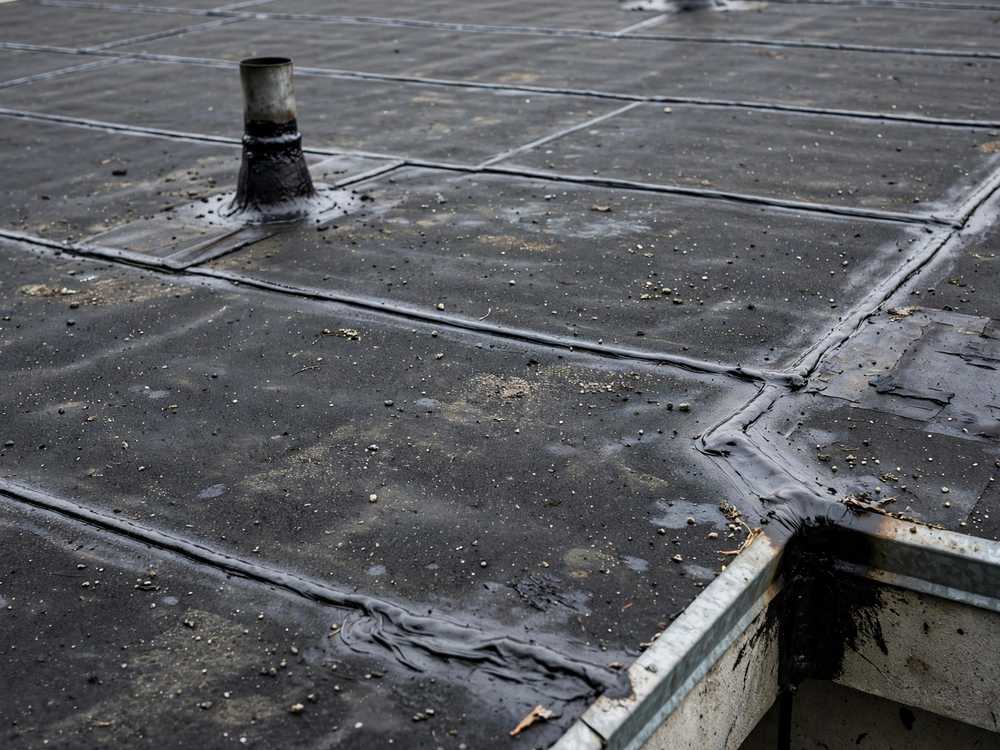
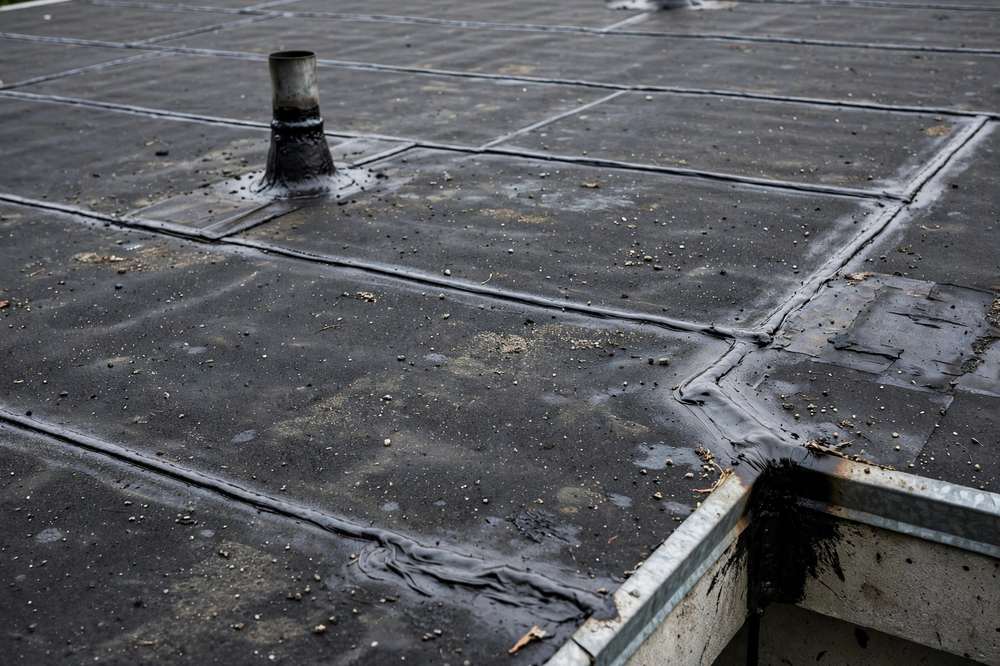
Ponding waterPonding water and blistering membrane on flat roofsPonding water and blistering membrane on flat roofs are checked at drains, scuppers, and seams together, because a membrane that holds standing water fails at its seams first, and the scope notes whether drainage correction is needed beyond a patch.
Gutter backupClogged gutters and fascia rot at the roof edgeClogged gutters back water under the roof edge, rotting fascia and soffit from the outside in. The work clears gutters and downspouts and checks the roof edge as one system.
Why homeowners call us for roof work
Residential roofing is worth doing when it fixes the system, not just the symptom. Here is what properly scoped work gives a homeowner.
Leaks stopped at the source
A leak is traced to its source — flashing, valley, penetration, or seam — instead of sealing the stain, so the same leak does not return with the next storm.
Materials matched to your roof
Shingle, tile, metal, and membrane materials are matched to the roof they sit on, with new flashing and underlayment at the work area, so the repair ages with the roof around it.
Work that passes inspection
Work is built to the code that governs it, with the LADBS permit route confirmed for a full replacement, so the job closes out cleanly when the house is sold.
Clean yards, no nail trails
The yard is swept for nails and debris is hauled away, so the job ends with a clean property and a photo record of the work beneath the surface.
What you receive
Clear records you can keep and share.
Photo report
The field, flashing, and attic photographed as found, before any work is discussed.
Written estimate
Materials, steps, and scope in writing, discussed before work begins.
Job log
A running log of visits, findings, and actions, so the roof's history is in one place.
Final walk sheet
The finished roof walked with you, with a short written summary of what was done.
Repair, replace or maintain: which one you need
Repair, replace, or maintain: three different decisions. Here is how to tell which one your roof is asking for.
Repair
A targeted fix: one flashing, one penetration, one slope.
Sensible when the failure is local and the deck beneath is sound
Fixes the source: flashing, penetration, or seam, not just the stain
Tested with water before the crew leaves
Replace
The whole system, when the deck or underlayment has gone.
Needed when the deck or underlayment has gone
Rebuilds flashing, underlayment, and field together
Triggered by LADBS re-roof rules once half the roof area is involved
Maintain
Scheduled checks, cleaning, and small fixes before failures appear.
Finds small failures before the rain season tests them
Keeps gutters, valleys, and drains able to shed water
Builds a written history a buyer or manager can read
Materials and systems we work with
Asphalt shingles
Architectural shingles
Clay tiles
Concrete tiles
Standing seam metal
TPO membrane
EPDM rubber
Modified bitumen
Towns we serve.
Based in Van Nuys and covering the places around it. Pick one for local details.
Call (818) 474-8963 to talk through your roof and its options.
Call (818) 474-8963 to discuss your roof and next steps.
Roofing questions Van Nuys homeowners ask
Published market data, not a quote from BFiber: Angi's Los Angeles guide, updated 31 July 2026, puts the average Los Angeles roof replacement at $17,271, with most projects from $10,256–$24,963, while Modernize's California guide, updated 26 August 2026, puts most California roof repairs from $450–$3,200, averaging about $1,400. Your scope depends on size, system, and deck condition, so call (818) 474-8963 to discuss your roof.
BFiber Roofing Repair & Install, based at 14202 Hamlin St, Van Nuys, CA 91401. Call (818) 474-8963 to discuss your roof and the areas served, including Van Nuys, Lake Balboa, Sherman Oaks, Panorama City, North Hills, and Valley Glen.
For most Van Nuys homes, the tract-house answer is architectural asphalt shingle: the workhorse of Valley tract housing, with heat ageing — granule loss and curling — as the story to watch. Tile suits Spanish and Mediterranean homes, with underlayment ageing as the honest lead, and cool-roof rules apply on larger replacements, with the parcel's climate zone confirmed on the permit. No single material is best for every house.
No financing terms are published for this business, and none are described on this page. Call (818) 474-8963 to discuss your project and how billing works.
Call (818) 474-8963 to discuss your roof and schedule a walk-through at a time that works for you. You get photos and a written scope to consider before you decide anything.